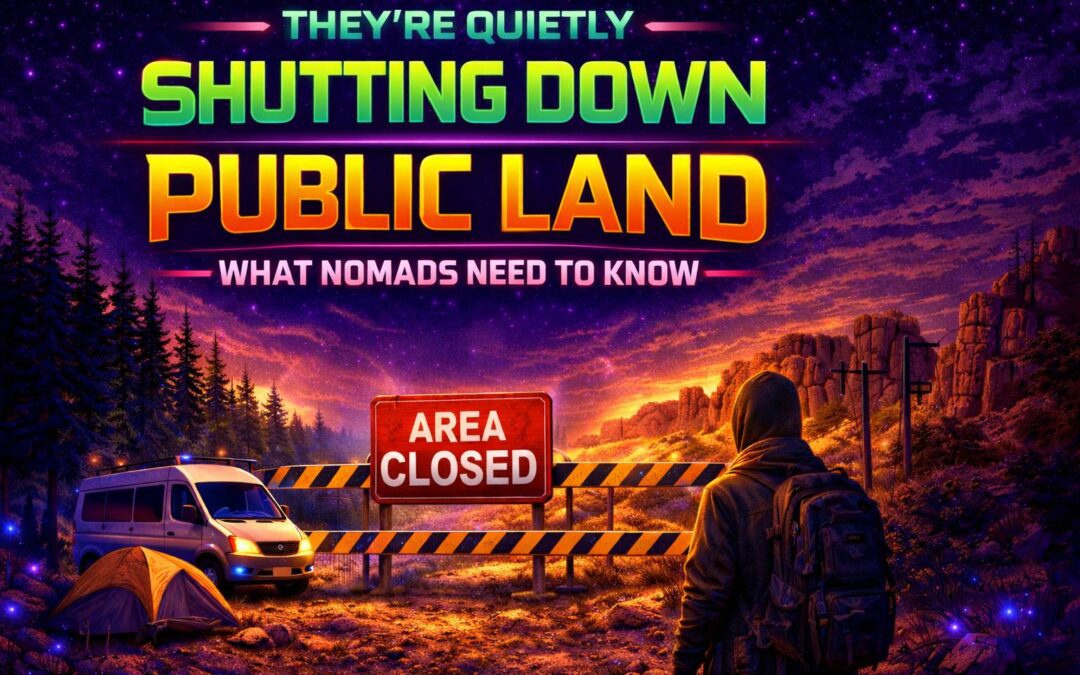
For years, public land has been the quiet lifeline for nomads, vanlifers, and vehicle dwellers across the U.S. Free. Open. Vast. But something is shifting.
Dispersed camping is being restricted. BLM land is being shut down. And the freedom we’ve relied on? It’s slowly vanishing one acre, one sign, one restriction at a time.
I’ve lived on and off public land since 2018. And in this post, I want to show you what’s happening, why it’s happening, and what we as a community can do about it.
What’s Happening on Public Land Right Now
Camps are getting more crowded. Trash is piling up where silence once lived. Rangers are showing up more often. And quietly, almost without notice, the freedom we counted on is starting to fade.
This is not a sudden shutdown. It is a slow tightening. New rules. New closures. New enforcement.
Many people do not notice until the sign is already posted.
Real BLM Closures Across the United States
These are not rumors or speculation. These are documented closures and restrictions that have already happened.
- Bend, Oregon
Forty acres of public land permanently closed due to long term camping impacts. All public use is banned. - Zion Corridor, Utah
Nearly fourteen thousand acres facing potential closure or conversion to permit only camping. - Sedona, Arizona
Multiple dispersed camping areas now closed due to crowding and overuse, with active enforcement. - Apache Junction, Arizona
Over one thousand acres temporarily closed for recreation development tied to the Goldfield project. - Black Rock Desert, Nevada
Entire sections of BLM land closed during Burning Man, restricting access to the public. - Mojave Desert, California
Over two thousand miles of off highway vehicle routes closed by federal court order, cutting off access to remote camping areas.
Each of these actions directly affects where people can legally park, camp, and live.
Why This Is Happening
There is no single cause, but several forces are pushing in the same direction.
Overuse
Nomadic living has grown rapidly. More vehicles means more pressure on fragile land, more waste, and more complaints.
Wildfire Risk
Fire seasons are longer and more severe. Agencies are responding with closures and restrictions to reduce human caused fires.
Local Pressure
Communities near public land often push for restrictions due to sanitation concerns, long term camping, or cultural conflict.
Politics and Development
Some closures are tied to tourism, mining, energy projects, or land redevelopment rather than conservation alone.
Public land is not disappearing, but access to live on it freely is becoming more limited every year.
The Future of Dispersed Camping
If current trends continue, here is what likely comes next.
- Permit systems for dispersed camping
- Stricter enforcement of stay limits
- Self contained vehicle requirements
- Seasonal and permanent closures
- Increased monitoring and surveillance
Free and flexible nomad living will still exist, but it will require more planning, awareness, and adaptability than ever before.
A Different Path Forward
If public land is no longer guaranteed, we need alternatives.
I believe the future lies in a decentralized land sharing model. Small, privately owned parcels spread across the country and shared among trusted nomads.
Not commercial campgrounds. Not RV parks. Just legal, quiet places to rest, reset, and move on.
I think of it as a mobile land network. A system built by nomads, for nomads, independent of government land access.
Nomad Syndicate and the Land Network Vision
This idea is already taking shape through Nomad Syndicate.
Nomad Syndicate is not just a chat group. It is a growing community of people sharing knowledge, resources, and long term solutions.
Through Discord, Facebook, and Reddit, we are connecting nomads who want to stay informed, help each other, and build something sustainable.
If public land access continues to shrink, community owned land may be the next evolution of nomadic life.
New to Nomadlife?
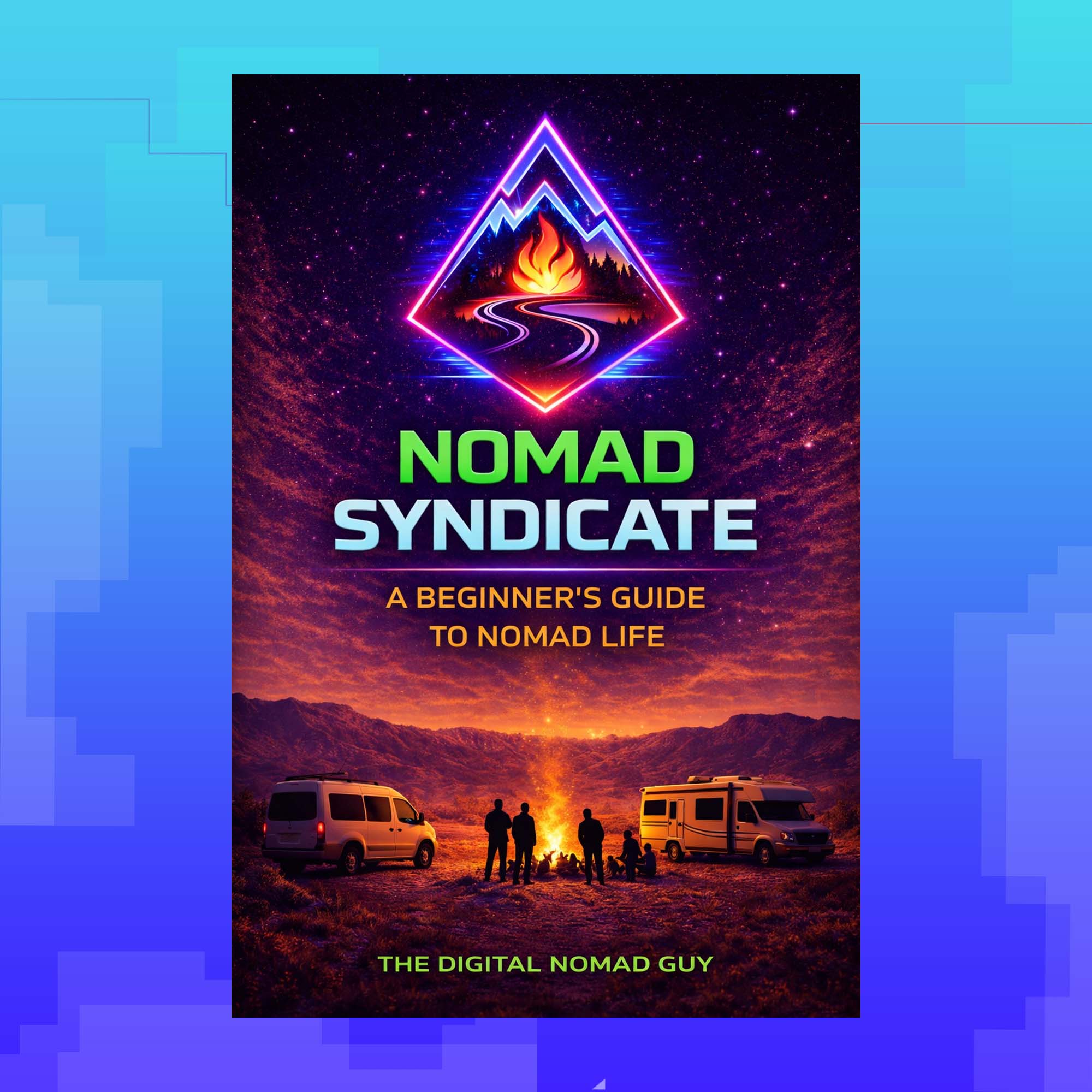
Check out my eBook:
“Nomad Syndicate: A Beginner’s Guide to Nomad Life”
Whether you’re planning to live in your car, van, or RV – or just exploring the idea – this guide is packed with insights, tips, and real talk from someone who’s lived it since 2018.
Where Nomadic Life Goes From Here
Nomadic life is not ending. It is evolving.
Those who stay informed, adapt early, and work together will continue to live freely. Those who ignore the changes may find themselves without options.
If this post resonated with you, join the conversation, join the community, and help shape what comes next.
The road is changing, but it is still open.
You Don’t Have to Do This Alone
Nomad living can be empowering, but it can also feel isolating, especially in the beginning. Questions come fast. Doubts show up at night. Some days you need advice. Other days you just need to know you’re not the only one figuring this out in real time.
That’s why Nomad Syndicate exists.
It’s a growing community of people living on the road, preparing for it, or rebuilding their lives through mobility. Some chose this lifestyle. Others were pushed into it. All of us are learning as we go.
Inside the Nomad Syndicate communities, you’ll find:
- Real conversations about living in vehicles
- Practical advice on water, power, parking, and safety
- Support during breakdowns, setbacks, and transitions
- People who understand the sacrifices and the freedom
- A place to ask questions without judgment
Whether you’re just starting, already living on the road, or considering your next move, community makes this life sustainable.
Join the Nomad Syndicate
- Facebook Group for daily discussion and support
- Reddit Community for open conversation and shared experiences
- Discord Server for real-time chat, resources, and deeper connection
This lifestyle works best when knowledge is shared and people look out for each other.
You’re not behind.
You’re not alone.
And you don’t have to figure this out by yourself.
Welcome to the Syndicate.
BLM Land Access FAQs for Vanlifers and Nomads
Is BLM land being shut down?
Can you still camp for free on BLM land?
Why is dispersed camping being restricted?
What happens if BLM land access keeps shrinking?
What is the land network idea for nomads?

